

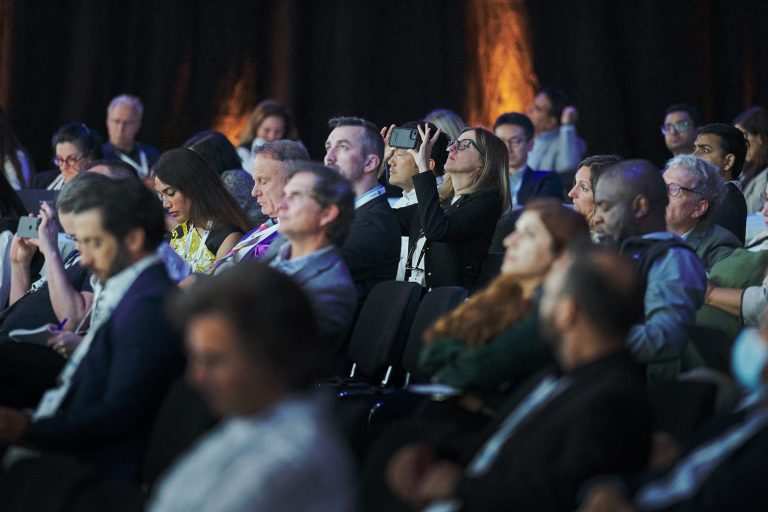
At the beginning of her keynote address on Artificial Intelligence (AI) in Medicines Development: Perspective From an EU Medicines Regulator, Jane Moseley, Senior Scientific Officer at the European Medicines Agency (EMA) said she would be addressing three key questions: Where do we want to get to with AI in medicines development?; Where are we now?; and How are we going to get there?
Providing the answers at the conclusion of her talk, Moseley said, “Where we want to get to is trustworthy use of AI and responsible innovation to accelerate development of new safe and effective medicines. Where we are now is that we see some emerging proposals at early stages and we already have some guidance issued. Then, next up for how to move forward, please try to engage with us on AI at every level, and above all, stay curious and critical and creative.”
Discussing where do we want to get to with AI, she shared an analogy she heard likening AI at present to a Formula One engine being bolted onto a Volvo car chassis.
“On one hand [with AI], we have the excitement, the potential to accelerate the development of new, safe, and effective medicines. But on the other hand, we have potential risks. And if we stretch the car analogy, we can really think about these risks and elaborate them further. If you have autonomous decision-making, will it always act in the best interest of the patient? If it’s going to veer off course, will there be a human to take charge? Will there be adequate safety features? Will it be reliable? What will happen with changes? So, our goal for the future is that we want to have responsible innovation and these kinds of risks are mitigated so that we can harness the benefits from AI in medicines development.”
In terms of where AI sits now in medicines regulation, Mosely said that based on interactions with and proposals from developers, “things look to be a bit slow getting off the ground”.
She mentioned that the EMA has published two documents on the landscape of AI, and she discussed a recent scientific publication in which the authors concluded that the use of AI in evidence generation so far seems relatively limited but shows an increasing trend. Her conclusion was similar looking at numbers of scientific advice letters issued by the EMA, although it was unclear where ophthalmology stood in relation to other specialties. She made some recommendations based on the content of the advice letters and noted that a major theme was to have a human-centred approach.
Also, in terms of where things stand now, Moseley said the EMA issued guidance on the use of AI in the medicines lifecycle. In addition, in January 2026, the EMA and US Food and Drug Administration jointly published ten guiding principles for Good Artificial Intelligence (AI) Practice in drug development. After outlining the ten-point list, Moseley encouraged those working in this area to remember the principles and to take engage in upcoming strategic opportunities that include a quarterly focus group between regulators and stakeholders and an annual multi-stakeholder data forum. In addition, a dedicated public workshop is expected to take place in the second quarter of 2027, and Moseley expressed hope that ophthalmology would be represented.