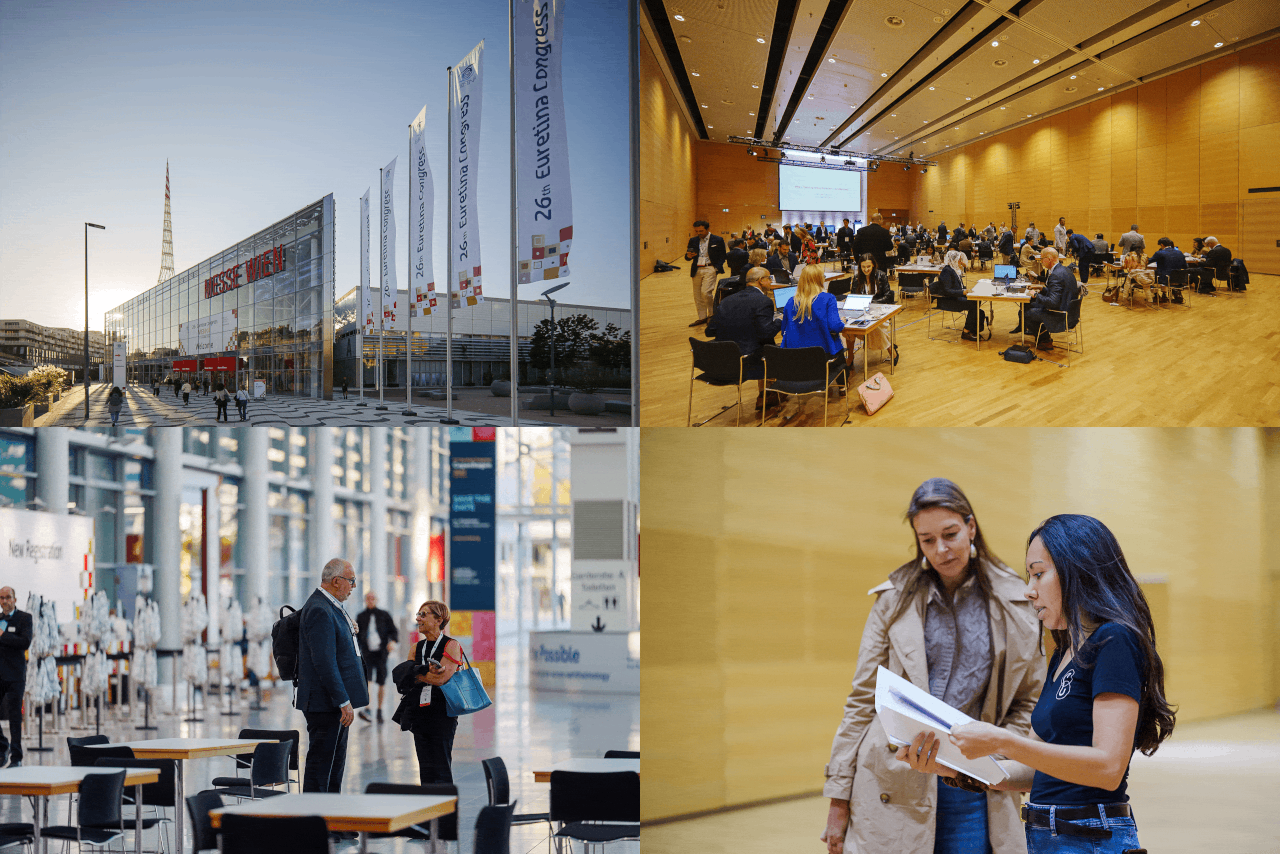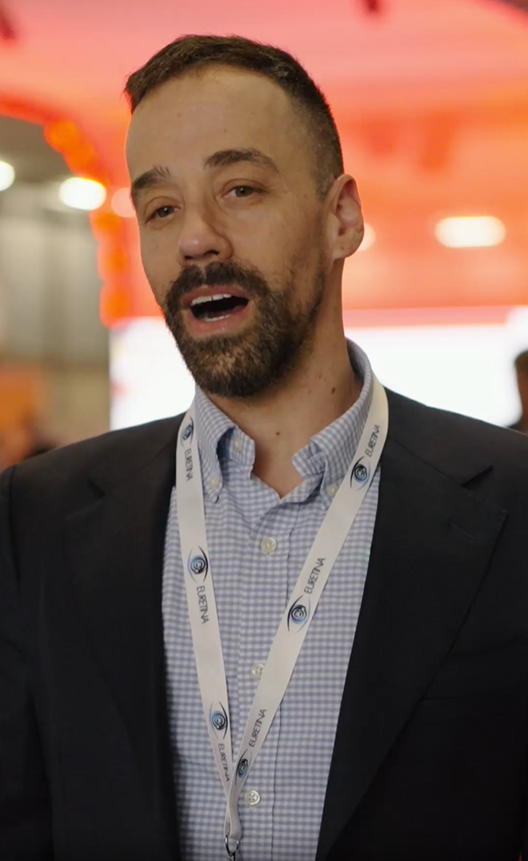

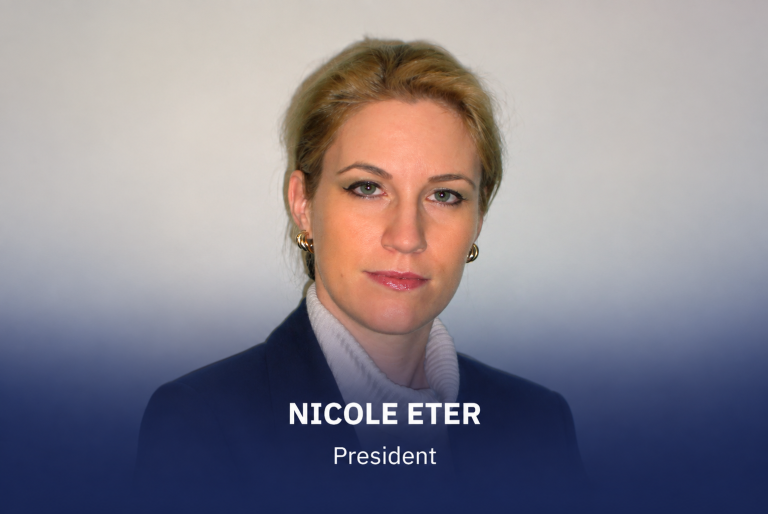
Prof. Nicole Eter, President of EURETINA, outlines her priorities and plans for the Society and previews some of the changes and highlights of the 2026 Congress programme.
As EURETINA President, what are your strategic priorities for the society, and how do you plan to advance the core mission across research, education?
EURETINA has grown in 25 years from a society built around one annual congress into the largest retina society in the world. My priority is to make that reach count, and I have three commitments. First, to open the Society further to the world while keeping a strong European voice. We are bringing co-opted Board members from Africa and South America onto the Board, expanding World Retina @ EURETINA, and working towards a Memorandum of Understanding with our partner societies.
Second, to raise and harmonise standards of care. That means the EBO Subspecialty Exam Retina, which is open to colleagues worldwide; one new guideline per Section every year; and a second-opinion platform for difficult diagnoses such as intraocular tumours.
Third, to invest in the next generation and in the wider retina team: a leadership programme for young specialists, and in the future hopefully also training for nurses, technicians and theatre staff.
Running through all of this is data and artificial intelligence (AI). Through EuretinaAI and new registries we want European retina to have the evidence base it needs. We also want a direct dialogue with regulators and patient organisations, so that new therapies actually reach our patients. Our own office in Dublin with permanent staff now gives us the continuity to deliver this year-round.
World Retina Day has evolved into the new ‘World Retina Stage’ at the Vienna meeting. How does this updated format change how international societies, patient advocacy groups, and global retina leaders collaborate on-site?
World Retina Day used to be a single day event held every two years. The response from retina societies from all over the world was so strong that in Vienna, for the first time, World Retina @ EURETINA runs across all four congress days. Societies from Asia-Pacific, the Americas, Africa and Europe are each bringing their own symposia, and there is dedicated space between sessions for networking and exchange. This new format changes the character of the collaboration. Our partners are no longer just guests with a time slot; they are co-hosts of a shared international programme.
Patient organisations are part of the change too — on Saturday we hold our first joint session with Retina International. Alongside the congress I will also meet the presidents of our partner societies to discuss how we build on this together.
What practical benefits does the new World Retina Stage offer attendees, and what value can its international perspectives bring their day-to-day clinical practice?
Delegates will see how the same disease is managed in very different health systems, in one building and in one week. For example, how are anti-VEGF regimens chosen where resources are limited? How do screening programmes for diabetic retinopathy work in Asia or Africa? How do colleagues in the United States use therapies that are not yet approved in Europe?
These comparisons make you question your own routine and often improve it. And because the sessions run over all four days instead of on a single day, it is easier for attendees to fit them into their programme.
The EURETINA Innovation Spotlight (EIS) continues to open the congress on Wednesday, 30 September. Why is EIS so vital for bridging the gap between bench science, regulatory frameworks, biotech startups, and everyday clinical practice?
Because an innovation only matters once it reaches the patient, and that path runs through many hands. At EIS, scientists, clinicians, start-ups, investors and regulators sit in one room, and that is rare.
The regulatory dialogue is what sets EIS apart. We want questions of trial design, meaningful endpoints and evidence to be discussed before pivotal trials are run, not after. Europe currently has no approved therapy for geographic atrophy, which shows how much depends on getting this right. This year, for the third time, the programme features a representative of the European Medicines Agency who will share a regulatory perspective on artificial intelligence.
We have also invited representatives of Retina International so that patients help shape the discussion at the point where priorities are set. In its entirety, the EIS programme covers gene and cell therapies, sustained delivery, inherited retinal disease, surgical and imaging innovation, and closes with a start-up showcase.
What do the four prestigious Keynote Medial lectures represent for EURETINA, and what key clinical takeaways should attendees look out for?
Together, the four lectures reflect the whole breadth of our specialty – medical and surgical retina, established leaders and the next generation. The Ophthalmologica Lecture is awarded through YOURS, our young retina specialists.
Frank Holz takes on dry AMD in the EURETINA Lecture, and for Europe that is a very topical subject. Look for where the field is heading beyond complement inhibition and how we should measure meaningful benefit.
David Steel’s Kreissig Award Lecture on tamponades addresses a decision every vitreoretinal surgeon makes several times a week, with direct relevance to anatomical success and patient comfort.
Noemi Lois’s Gisbert Richard Lecture on diabetic tractional retinal detachment combines surgical insight with a strong message on generating evidence in a field where randomised data are scarce.
Elon van Dijk’s Ophthalmologica Lecture brings evidence-based treatment to central serous chorioretinopathy, a common condition where practice has long outpaced the evidence.
For a retina specialist attending EURETINA for the very first time, what is your single best ‘tip from the top’ to navigate the meeting and make the most of the experience?
Plan your programme in the congress app before you arrive, but leave gaps. Some of the most valuable moments at EURETINA happen between sessions: at a poster, in the World Retina @ EURETINA area, or in conversation with someone whose paper you have read. Don’t hesitate to introduce yourself; our community is remarkably open. And if you are early in your career, visit the YOURS sessions — that is where many long-term collaborations begin.
The EURETINA Fun Run is one of the most popular social and wellness traditions. How excited are you to lace up your running shoes in Vienna – and on a lighter note, what target time are you going for this year?
I am delighted that the Run is back after a pause of a few years. I strongly supported bringing it back. It is one of the few moments when the whole community meets without name badges and hierarchies, and it sends a good message about looking after ourselves in a demanding profession. My target is simple: that every runner crosses the finish line with a smile – and still makes it to the first session on time.
What is your personal ‘can’t-miss’ moment of the Congress?
For me it is EURETINA Session 11 on Saturday afternoon, 3 October, 14:15–15:15: The Future of Retina: A Global Leadership Forum. This is completely new at EURETINA. Presidents of leading ophthalmic societies from Asia-Pacific, the Americas, Africa and Europe share one stage to debate the questions that will shape our field over the next decade. Can we still deliver equitable retina care with an ageing population, a growing anti-VEGF burden, and workforce shortages? Which retinal decisions should never be delegated to AI? Are we asking the right research questions? And how should we train the next generation? The audience is part of the discussion. For me this is the idea behind World Retina @ EURETINA in its purest form — shared challenges, discussed together, across borders.