

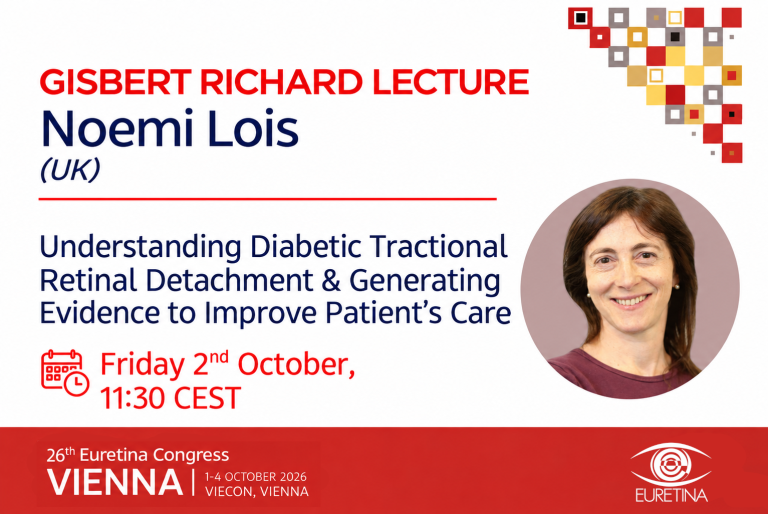
Gisbert Richard Lecturer will review existing evidence regarding the development and management of diabetic tractional retinal detachment and research needed to fill knowledge gaps that will enable better patient care.
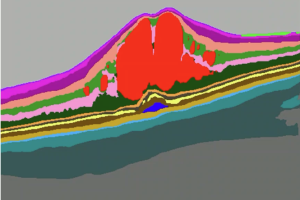
Since Professor Noemi Lois, MD, PhD, joined the faculty in the Department of Ophthalmology at Queens University, Belfast, Northern Ireland, UK in 2013, her academic career has concentrated on the sight-threatening complications of diabetic retinopathy (DR), combining clinical and translational research activities with responsibilities for direct patient care. She says that, early on, based on experience operating on patients with various complications of DR, she was particularly struck by the difficulties associated with diabetic tractional retinal detachment (dTRD). “Surgery itself is technically challenging yet can be associated with high anatomical success rates. However, even when the retina is reattached, functional outcomes can be poor,” Prof. Lois says.
In her delivery of the Gisbert Richard Lecture titled “Understanding Diabetic Tractional Retinal Detachment and Generating Evidence to Improve Patient’s Care”, Prof Lois will be discussing goals and challenges for future research aiming at improving functional outcomes for patients with this complication of DR. She will also speak about preventing dTRD development. “My lecture will include information that I believe is of interest not just to vitreoretinal surgeons but also to medical retina specialists managing people living with diabetes and DR. In addition, certain aspects will have relevance to other allied medical staff working in clinics that serve this patient group,” says Prof. Lois, who is Professor of Ophthalmology at Queens University and Honorary Consultant Ophthalmologist and Vitreoretinal Surgeon at the Belfast Health and Social Care Trust in Belfast.
In her talk, she will highlight the need to better understand the pathogenesis of dTRD and explain why she believes it is too simplistic to think that ischaemia and mechanical forces exerted by fibrovascular membranes in eyes with proliferative DR are the only factors involved. “Identifying risk factors for development of dTRD is low-hanging fruit and something that we can pursue now, especially with the help of artificial intelligence. Not only will it enable more timely intervention, but it would be useful also for identifying patients who need close surveillance,” she says, adding that the future is also likely to bring advances in therapeutics.
“But, given that dTRDs are not, fortunately, a frequent complication in people living with diabetes, such studies will require an international ‘group effort’ to gather enough data that is necessary for robust conclusions to be made. High level of funding would also be needed.”
Because there is a lot about dTRD that is not known, Prof. Lois notes that her lecture will include many thought-provoking questions. “Hopefully, these questions will stimulate curiosity within the audience and encourage many to take part in research,” she says.
Prof. Lois will deliver the Gisbert Richard Lecture on Friday, 2 October 2026 at 11:30 CEST in Stolz 1.