

Join the Women in Retina networking breakfast being held Saturday, October 3, 2026, from 07:30 – 09:00 CEST (no pre-registration required), Location: World Retina Plaza.
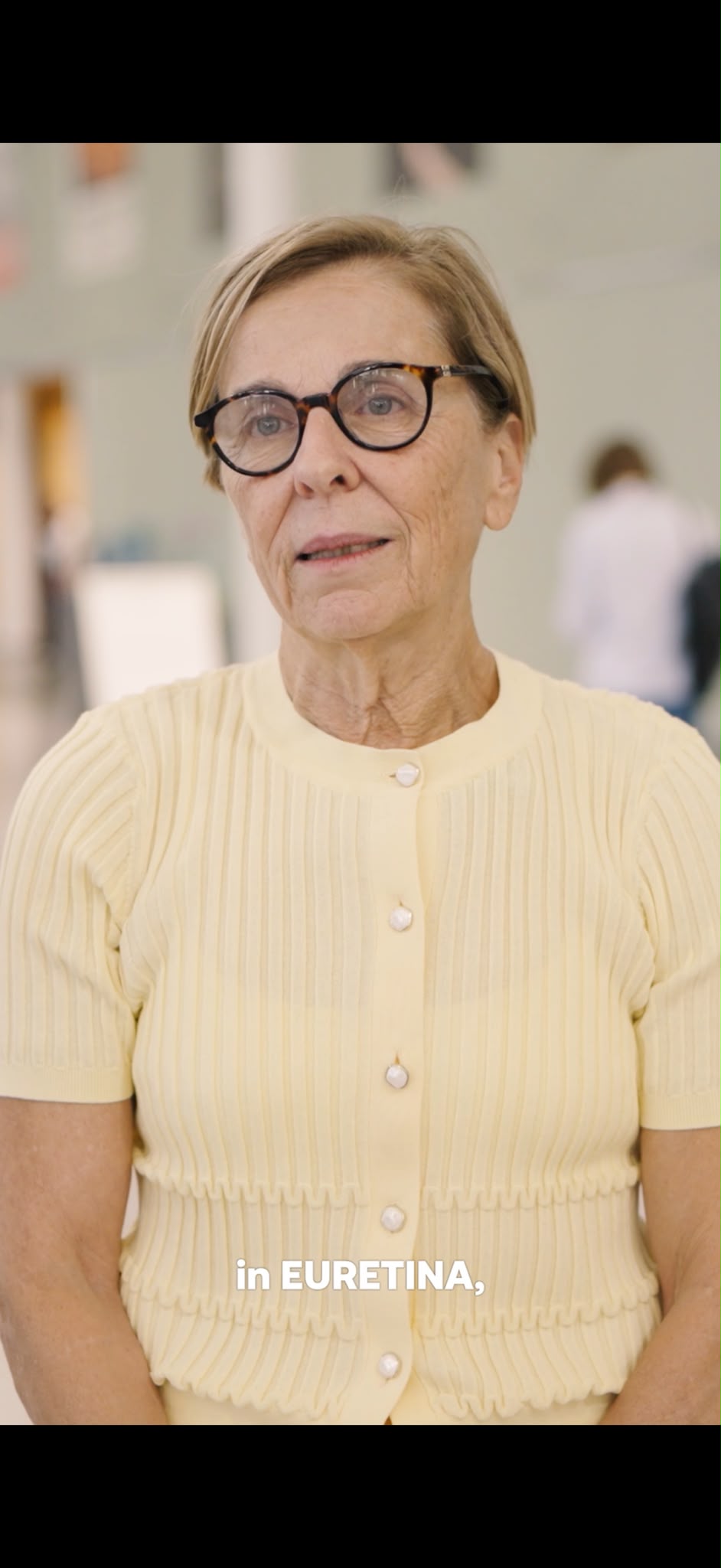
The EURETINA Women in Retina programme was launched in 2021 as a direct part of the society’s Roadmap 2025 development plan and largely shaped by data collected in a survey designed to evaluate and address the career obstacles faced by female retina specialists. Five years later, a second survey asking some new questions is being conducted to understand what progress has been made. Professor Anat Loewenstein, MD, was a driving force in introducing Women in Retina in 2021. Looking back over the past year, she the programme has continued to gain momentum as reflected by both the growth of its community and the increasing visibility of women across the retina field. “More women are taking active roles as speakers, investigators, mentors, and leaders at international retina meetings and within collaborative research initiatives,” Dr. Loewenstein observes. “For me, one of the most important signs of progress is that Women in Retina is becoming more than an initiative associated with a single meeting, but rather is developing into a network where women can connect, exchange experiences, support one another professionally, and help translate relationships into meaningful career opportunities. Maintaining this momentum and translating these connections into meaningful opportunities is something we should continue to build on into the future.”
Creating connections that matter
Professor Loewenstein points out that mentorship remains central for translating relationships into meaningful career opportunities, but the value of mentorship extends beyond formal mentor–mentee relationships. “Sometimes the most influential support comes from a senior colleague who makes an introduction, recommends someone for a speaking opportunity, invites their younger colleague to participate in research, or simply offers advice at an important moment in the woman’s career,” she observes. “By creating opportunities for these relationships to develop across institutions and countries, Women in Retina can be especially valuable for younger retina specialists who may not have access to a large retina network within their own institution. The initiative offers a platform where professional connections can become collaborations, guidance, and long-term support.”
Multidimensional support
Noting that a demanding clinical or surgical career brings challenges that are not always discussed openly, Professor Loewenstein says that one of the strengths of a professional network such as Women in Retina is the opportunity for women to connect with colleagues who understand these pressures and who may have faced similar issues at different stages of their careers. The peer support available through Women in Retina can be practical as well as personal. “Conversations about organising clinical practice, combining patient care with research and teaching, managing leadership responsibilities, or navigating career transitions can provide valuable perspective. There is no single model of work-life balance that suits everyone, but open discussion with trusted colleagues can make these challenges easier to address,” she explains.
Establishing visibility
Offering advice for women seeking to become more visible in the international retina community, Professor Loewenstein says the message is clear. “Become involved and do not wait until you feel completely ready. Clinical research is an excellent route to becoming part of the international retina community. Participating in clinical trials, contributing to collaborative research, presenting data, and looking for opportunities to work with colleagues outside one’s own institution can all open doors,” she says. “Visibility should ultimately come from meaningful professional contribution. Developing an area of expertise, doing good work, sharing results, and being willing to accept opportunities when they arise are all important steps. At the same time, senior members of our community have a responsibility to identify talented younger women and actively create opportunities for them.”
Guidance for younger colleagues
Addressing early-career retina specialists, Professor Loewenstein points out that access to people and opportunities is often just as important as access to information. “Mentorship, research collaborations, clinical trial experience, presentation opportunities, and exposure to international networks can have a major impact on career development,” she says. Professor Loewenstein encourages younger colleagues to identify an area that genuinely interests them and develop expertise in it. In addition, she advises women to actively build relationships beyond their own department or institution.“International meetings such as EURETINA provide an excellent environment for making these connections and becoming part of a wider professional community,” Professor Loewenstein says.
Looking ahead
In her view, as the Women in Retina network continues to grow, it should remain focused on mentorship, leadership development, research collaboration, and increasing the visibility of women across all areas of retina. These priorities can help ensure that the initiative supports women not only at individual moments in their careers, but also throughout their professional journeys, Professor Loewenstein says, adding that expanding participation geographically and across career stages will also be important. “One of EURETINA’s greatest strengths is its international community. Women in Retina should reflect that diversity by ensuring that participation is not limited to colleagues from large academic centres or established networks. A truly effective initiative must include women from different countries, institutions, practice settings, and career stages,” she explains. “Creating opportunities to meet informally, developing mentorship and collaboration across borders, and actively involving women from different countries and institutions can help make the network more inclusive. Digital communication gives us the opportunity to maintain these relationships throughout the year, rather than limiting engagement to the annual congress.”
Issuing invitations
Professor Loewenstein strongly encourages women attending EURETINA in Vienna to join the Women in Retina networking breakfast being held Saturday, October 3, 2026, from 07:30 – 09:00 CEST (no pre-registration required), Location: World Retina Plaza. “This event is an excellent opportunity to meet colleagues from different countries and career stages, exchange experiences, and develop new professional connections in an informal setting,” she says.
She also urges all members of the retina community to complete the 2026 Women in Retina survey that is being conducted to help inform the next stage of the initiative: “The strength of Women in Retina ultimately depends on participation. I hope colleagues will take advantage of both the networking breakfast and the survey to help us continue building a strong, inclusive, and truly international community,” Professor Loewenstein says.