
In the second part of our look back at the closing session, we cover myopia surgery, lifestyle and genetics in dry AMD, global AI models, robotics, diabetic retinopathy screening and the limits of retinal age.
Part 1 covered the first seven highlights from the final session of EURETINA 2026.
Myopia
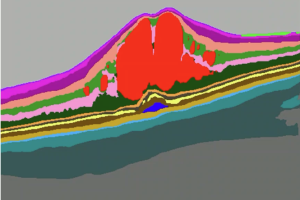
Anat Loewenstein presented the myopia highlight: Tomonari Takahashi’s talk on new imaging and long-term outcome of myopic traction maculopathy. In myopic maculopathy, a macular hole may develop, often beside a vessel (a paravascular hole). Takahashi showed that after surgery, the follow-up must run long: his OCT series showed holes continuing to evolve between three and five years. He described a progression from retinoschisis to macular hole to macular hole with retinal detachment, and showed that earlier, fovea-sparing surgery was linked to better outcomes.
Prof Loewenstein said the talk was chosen for two reasons: myopia is a growing field, and the images show how careful OCT observation can guide how to operate. See also our myopia session report.
Non-neovascular AMD
Caroline Klaver presented the highlight from her own talk, on environmental and genetic risk factors for dry AMD. Sixty common variants are known, including “bad” and “good” ones in the same gene, CFH. Because each person carries an aggregate of risk variants, an individual’s genetic risk should be calculated from a genetic risk score. A healthy lifestyle (the right diet, regular exercise, a healthy BMI and not smoking) cuts risk by 50% in every genetic risk category, and five-fold in those at the highest genetic risk.
Can patients change? In a lifestyle study with three arms, group A received standard advice, group B personalised genetic and lifestyle risk information, and group C the same plus monthly coaching. After a year, group C had changed its lifestyle most. Across 150 participants the median lifestyle score rose from 6 to 7, and from 6 to 8 in group C. Prof Klaver suggested lifestyle clinics, or a dedicated nurse, may be needed.
Artificial intelligence
Martin Zinkernagel presented Paul Nderitu’s talk on Global RETFound, an effort to build the first truly global foundation model for retinal images. Earlier models drew on a limited range of countries. This one targets under-represented regions and is trained on around 100 million synthetic and real colour fundus photographs. By mid-September, 238 sites in 81 countries had joined, and 108 sites in 47 countries had contributed data or model weights.
In an early beta, pretraining on synthetic images improved classification of eye and systemic disease over the published RETFound model. It is aimed at ocular and “oculomics” tasks and is open access for non-commercial research, so, as the presenter put it, every one of us can use it. The key finding: large-scale retinal foundation models can deliver generalisable performance and support more accessible, collaborative ophthalmic AI. See our AI session report.
Robotics
Nicole Eter presented Peter Stalmans’s introduction to the robotics session. It set out three ways a surgeon can share control with a robot: co-manipulation, where surgeon and robot hold the instrument together; telemanipulation, where a hand controller commands the robot, which suits remote surgery; and handheld assistance, an active handpiece that corrects the tip. The main applications are penetration of the subretinal space, for gene therapy, and puncture of retinal vessels.
Four platforms are in parallel development: Preceyes (telemanipulation), Mynutia (co-manipulation), Acusurgical’s LUCA and Oculotronics (telemanipulation and remote). The message: “robotic” does not mean one size fits all, and we will hear much more in the coming years. Read our full robotics session report.
Diabetic retinopathy and vascular diseases
Elisabetta Pilotto presented Tien Yin Wong’s talk on AI in diabetic retinopathy and risk prediction. The chairs chose it because diabetic retinopathy is a leading cause of preventable blindness, and screening is hard given the number of people with diabetes. Wong framed AI’s role in three steps. Detection, whether a patient has referable retinopathy today, is mature, and validated software can now be used for screening. Prediction, whether and when a patient will progress, points to individualised screening intervals. Oculomics uses a fundus photograph as a window on systemic disease. Our Session 14 report covers the talk in detail.
Imaging
The last highlight, presented by Stela Vujosevic, was Siegfried Wagner’s talk on oculomics, neurodegeneration and AI, and it added a note of caution. Several retinal-age models now exist, including consumer ones, and they link to conditions such as Parkinson’s disease, stroke and mortality. But these models, like those for chest, abdominal and brain images, are very sensitive to regression to the mean. The pattern in which unhealthy people look older can reverse in older participants. When a healthy and an unhealthy person of the same age are compared, the retinal age gap ranks the unhealthy one as older 65% of the time under 50, but only about 50% by 70, “just like a coin toss”.
Across four cohorts, two in Japan and two in the UK, the link with cardiovascular disease was consistent. However, repeated measurements of retinal age did not show meaningful trajectories linked to health status. The data are still unpublished. The key message remains: the retina may act as a window to brain and systemic health, with AI helping to identify subtle biomarkers of neurodegeneration before they become clinically obvious.